Rural services in England: village halls, community shops and pubs
About 10,000 village and community halls operate in England, according to estimates by the charity ACRE. That figure shows just how much rural services in England depend on places run by communities themselves. Alongside these halls are shops and pubs owned by local residents. Here we explain what these places offer, who supports them and how widespread the movement has become.
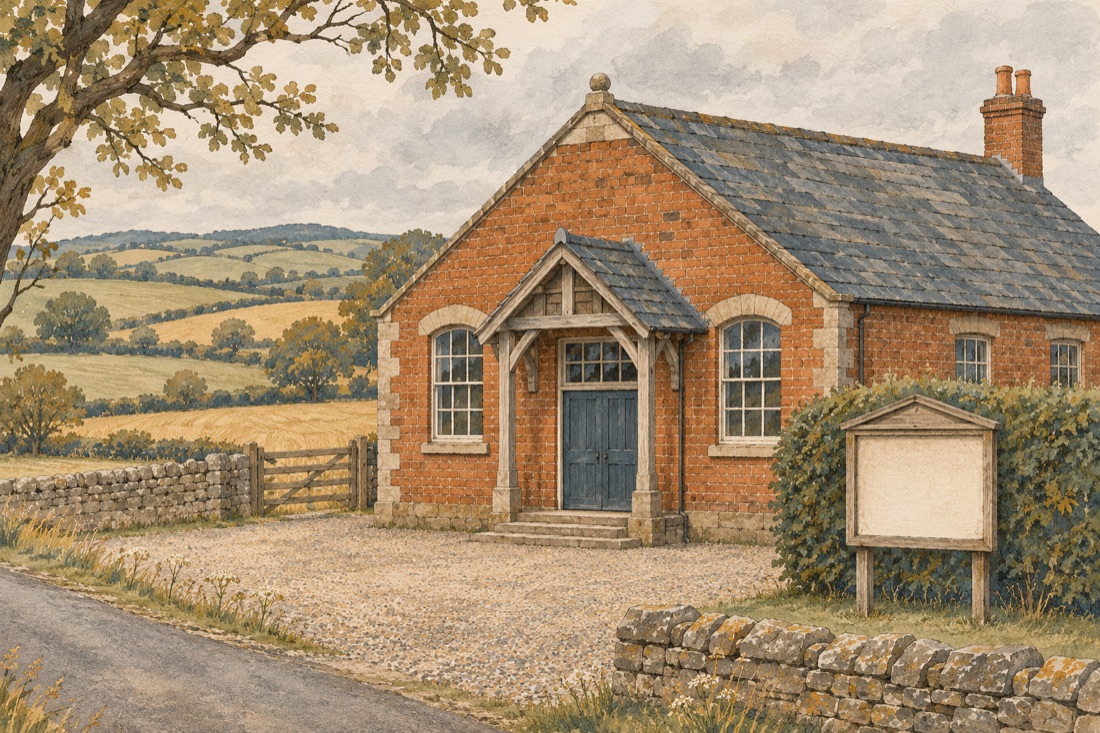
What do we mean by rural services in England?
The phrase covers places where people in smaller settlements meet, shop or simply spend time together. It usually refers to three kinds of venue: the village hall, the community shop and the community pub. All three have strong local roots. There is usually a community behind them, rather than a large retail chain.
Each type of venue has its own support organisations. ACRE provides most of the support for halls, while Plunkett UK supports community shops and pubs. Knowing which organisation covers which venues makes it easier to find reliable information about each.
The village hall is more than a classic building
The term village hall covers more than its name might suggest. As well as traditional halls, the category includes community centres, sports pavilions, church halls and other multi-purpose buildings. The figure of 10,000 therefore covers village and community halls together, rather than just buildings known by the traditional name.
ACRE is a national charity that supports rural communities. In England, it works through a network of local organisations operating at county level. This allows it to bring a national perspective together with an understanding of what communities in particular areas need.
The information on halls is not based on one-off estimates. ACRE carries out a national survey of village halls every ten years, and the 2020 survey was analysed by the Centre for Regional Economic and Social Research (CRESR) at Sheffield Hallam University. It is a useful source to consult if you need more detail than this overview provides.
Community shops and pubs: how do they work?
A community shop is owned by its community, and a community pub works on the same principle. In both cases, residents take part in a business that might otherwise never open or could disappear from the village. Support comes from Plunkett UK, formerly the Plunkett Foundation, a charity based in Woodstock, Oxfordshire. It helps communities to set up and run enterprises such as shops, cafés and farms.
The figures for shops and pubs cover the whole of the United Kingdom, rather than England alone. According to data for the end of 2021, there were 407 community-owned shops and 146 community-owned pubs. Plunkett's 2025 report puts the figures at about 459 community shops and 199 community pubs.
A comparison of these figures suggests growth, with roughly 50 more shops and more than 50 more pubs. However, the figures come from different reports and years, so the difference is best seen as an indication of the overall trend rather than a precise measure of change. Even with that qualification, community shops and pubs clearly have a sizeable presence.
Why is it worth knowing these organisations?
First, ACRE and Plunkett UK are useful starting points for anyone who wants to understand how rural services in England work. Each organisation focuses on a different area, and together they offer a fuller picture. ACRE provides insight into village and community halls, while Plunkett UK covers shops and pubs run by communities.
Second, the figures help us understand the scale of the movement. About 10,000 halls in England and hundreds of shops and pubs across the United Kingdom show that community ownership and local management work in practice. This approach has been adopted in many places, well beyond a single experiment.
Third, this knowledge is useful if you are doing research, writing about local life or planning an initiative of your own. Understanding how support is organised nationally and at county level helps you find the right people to contact more quickly. We have deliberately left out addresses, opening hours and prices, as these depend on the village concerned.
Summary
Village halls, community shops and community pubs are three pillars of rural services in England. Two sets of figures give a sense of their scale: about 10,000 halls in England, and 459 community shops and 199 community pubs across the United Kingdom according to Plunkett's 2025 report. For current figures and a fuller understanding of the context, it is worth consulting the information published by ACRE and Plunkett UK.